
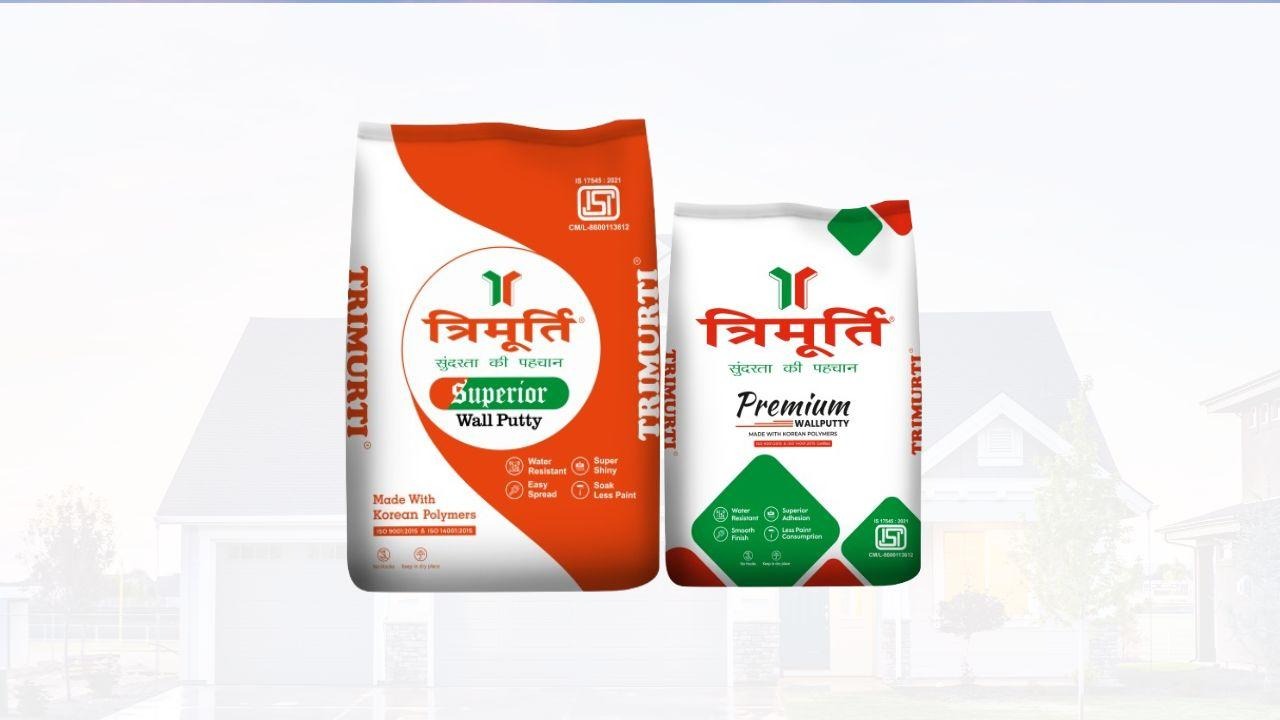
Construction projects require accurate budgeting because every material expense directly impacts the overall financial plan and project success. Among all construction inputs, wall care putty price plays a crucial role in determining cost efficiency, as wall finishing materials hold special importance since they influence both the appearance and durability of surfaces. A key element in this category is wall putty, widely used before painting to achieve a smooth, even, and crack-free finish.
Understanding the cost structure, usage efficiency, and application requirements of wall putty is essential for builders, contractors, and homeowners. Proper estimation helps in controlling expenses, avoiding wastage, and ensuring better financial planning throughout the construction process while maintaining quality standards.
Understanding the Role of Wall Finishing Materials in Budgeting
Wall finishing is not just a cosmetic step; it is a foundational process that ensures paint longevity, surface protection, and structural uniformity. Materials like putty are applied in multiple coats, meaning their consumption is higher than many expect. This makes cost estimation a critical part of planning.
A major reason construction budgets often fluctuate is due to underestimating finishing material expenses. When surface preparation is not calculated correctly, it leads to additional procurement, labor extensions, and timeline delays. Therefore, understanding pricing dynamics helps avoid unexpected cost overruns.
Key Cost Components in Construction Finishing Work
Several elements contribute to the final expenditure of wall preparation:
- Material quality and composition
- Coverage area per kilogram
- Number of coats required
- Labor application charges
- Surface condition and repair needs
- Brand positioning and market demand
Each of these factors influences how much material is needed per square foot, ultimately affecting the total project budget.
How Material Quality Influences Overall Project Cost
Higher-quality wall finishing materials provide better adhesion, smoother surfaces, and longer durability. This reduces the need for repeated maintenance and repainting, indirectly lowering long-term costs. However, premium products often come at a higher upfront investment.
Cheaper alternatives may seem cost-effective initially, but can lead to higher consumption and additional repair work. This trade-off between upfront cost and long-term savings is a crucial budgeting decision in construction planning.
Why Price Variation Happens Across Products
Market pricing for wall finishing materials is not fixed and can vary due to multiple reasons:
- Raw material quality (cement, polymers, additives)
- Manufacturing technology and standards
- Packaging sizes (small vs bulk packaging)
- Transportation and logistics costs
- Regional demand fluctuations
- Brand positioning in the market
Because of these variables, contractors must evaluate not just price but also performance efficiency when selecting materials for large-scale projects.
Importance of Coverage Efficiency in Budget Planning
One of the most overlooked aspects of budgeting is coverage efficiency—how much surface area a material can cover per kilogram. A product with better coverage reduces overall consumption, even if its per-unit cost is higher.
This means two products with different pricing can result in similar or even opposite total project costs depending on usage efficiency. Hence, cost per square foot becomes a more reliable metric than cost per bag or kilogram.
In premium interior finishing, the pop wall putty price is often evaluated alongside coverage efficiency because application smoothness can reduce repainting cycles and surface corrections.
Impact of Surface Condition on Material Consumption
Wall condition plays a significant role in determining material usage. Rough, uneven, or damaged surfaces require additional layers of application. This increases both material consumption and labor time.
New constructions usually require fewer corrections, while renovation projects often demand more preparation work. Budget planning must account for these differences to avoid cost miscalculations.
Labor Costs and Their Relationship with Material Choice
Labor expenses are closely tied to material selection. Products that are easier to mix and apply reduce working time and effort, lowering labor charges. On the other hand, complex application processes can increase overall labor costs.
Efficient materials not only save time but also reduce wastage during application, improving cost efficiency across the entire project lifecycle.
Budget Optimization Through Smart Material Selection
Smart construction budgeting involves balancing quality and cost efficiency. Instead of focusing only on the lowest-priced materials, planners should consider:
- Total coverage efficiency
- Material durability
- Application ease
- Long-term maintenance savings
- Project scale requirements
This approach ensures that both short-term and long-term financial goals are achieved without compromising on construction quality.
How POP-Based Finishing Materials Affect Budgeting Decisions
POP-based finishing solutions are often chosen for smooth interior surfaces. They provide excellent finish quality but may vary in pricing depending on composition and brand quality. These materials are typically used in premium interior designs where surface smoothness is a priority.
Since they may require skilled application and multiple coats in some cases, they can slightly increase labor and material costs, influencing the overall budget structure.
Strategic Planning for Large Construction Projects
For large-scale developments, even minor differences in material pricing can significantly impact total expenditure. Builders often conduct detailed cost analysis per square foot to optimize procurement decisions.
Bulk purchasing, supplier negotiations, and efficient material estimation play a key role in controlling costs. Accurate forecasting ensures that projects stay within financial limits while maintaining quality standards.
Conclusion
Wall finishing materials play a critical role in shaping construction budgets, where the wall care putty price significantly influences overall planning and cost estimation. Their pricing, efficiency, and application requirements impact both immediate expenses and long-term maintenance costs. A well-planned selection process ensures better financial control, improved durability, and enhanced project outcomes. Understanding material usage, labor requirements, and surface conditions helps builders and homeowners create accurate, efficient budget plans while avoiding unnecessary overspending and delays.
Leading construction material solutions provider Trimurti offers a wide range of wall care solutions and advanced products, including Trimurti tile chemical, designed to support modern construction needs with consistency and performance. Their products are developed to ensure smooth application, strong adhesion, and reliable surface preparation for both residential and commercial projects. With a focus on quality standards, innovation, and practical usability, they provide materials that help improve project efficiency, reduce wastage, and support long-term durability across diverse building requirements.